
10 July 2025 • Cyber security

Running a cyber security awareness program is no small task. Content management, compliance alignment, user management, tracking progress and performance…
Without the right tools, it’s enough to make any CISO nervous. That’s where a cyber security LMS comes in.
A cyber security LMS is essentially a learning management system dedicated to cybersecurity training and awareness.
As a CISO, IT Manager, or L&D specialist, it can be difficult to find an LMS that ticks all the boxes on your requirement checklist.
Luckily, we’ve got you covered.
In this article, you’ll learn how to select a cyber security LMS that best fits your wishes. We’ll also share the best tools that are currently available.
What is a cyber security LMS?
A cybersecurity LMS (Learning Management System) is an online platform that allows organizations to deliver, manage, and track cybersecurity training. Whether that’s to improve the overall security awareness of your organization, reduce risks, meet compliance requirements or all of the above.
‘Cyber security LMS’ isn’t a common term, but it’s about time we start using it more. Because often times, the term is used a synonym for a security awareness training program.
But it shouldn’t be, because there’s a clear distinction to be made.
A security awareness program is often focused on just offering training content. An LMS, on the other hand, should give you the opportunity to:
- Manage the training content
- Adjust the existing content or add customized content
- Track participation and performance for compliance
What to look for when selecting a cyber security LMS
There are a lot of providers in the market and all of them offer slightly different features and benefits. Here’s what to take into account while comparing LMS tools.
1. Content
The first thing you need to pay attention to is the training content that is available. Ask yourself questions such as:
- Is all content up-to-date and relevant?
- Is there specific content for my industry available?
- Does the content discuss all relevant security threats (not just phishing)?

Next, consider if you need the ability to customize content. Even though a cyber security LMS can be used as a one-size-fits-all solution, you may want to add your specific security policies. Also, some information security standards require role-specific training, which you can make happen by adding your own content to the training program.
A last thing you need to consider is content management. Many tools offer a huge library of content that you need to sift through in order to put together your own learning program. This can be a time consuming effort, which is often a bottle neck if you don’t have a full FTE working on security awareness. In this case, you’re better off with a plug and play solution like Guardey.
2. Learning experience
The learning experience goes hand in hand with the content. Here, we’re talking about the way the content is presented. Is it a traditional e-learning course or is there gamification in the spirit of Duolingo? Are there different languages? Is there a mobile app for employees without access to a computer during work?
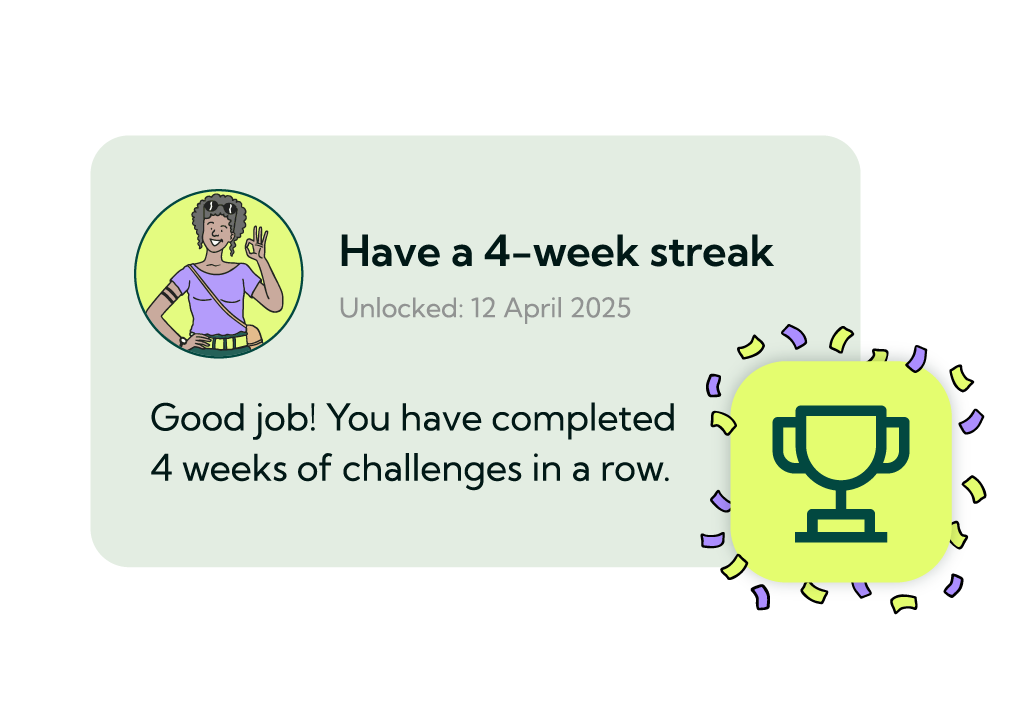
Think about a regular workday of your employees and consider what works best. Is there time for a course that takes multiple hours at once? Or are you better off with a gamified solution that offers microlearnings every week?
→ Learn more about gamification in security awareness
3. Reporting and analytics
To measure is to know. That’s why the right tools enable you to measure both participation and performance on both an individual and team level.
It’s key to keep track of participation and see which people or teams may need a little nudge in the right direction.
By monitoring performance, you can see which people are underperforming on certain topics, which might mean you have a security risk on your hands.
Make sure that you are able to export all reports or that these reports are regularly and automatically sent to you. Participation and performance data is key to prove compliance during audits.
4. Admin experience
Get a good understanding of how you are looking to operate your LMS before you buy a tool.
Maintaining an LMS can be a full-time job, especially in enterprise organizations that look to customize most of the training program. You can also decide to use a plug and play solution that takes up close to zero of your time, aside from regularly checking analytics.
While checking providers, look for the following:
- How is user management organized?
- Are there native integrations with Azure AD, Microsoft Teams, and so on?
- Is the training program plug and play or do you need to set up the training program yourself?
We’ve compared the 5 best cyber security LMS platforms
We’ve selected the best cyber security LMS platforms available currently by judging them on the above criteria.
Let’s dive right in.
1. Guardey – Duolingo for security awareness
Guardey is a gamified security awareness platform with one main goal: making security awareness fun. By gamifying the learning experience, Guardey adds an element of friendly competition that boosts engagement and participation.
Guardey is plug and play, which means the training content is automatically scheduled by a team of cyber security specialists and educationalists. However, you can easily add your own custom content if you wish. After a year, Guardey has learned about the skill level of each individual and will start supplying them with adaptive content.

The reporting and analytics section is easy-to-use but in-depth. In one view, you can see how your team is performing compared to a worldwide benchmark and how your participation is trending.
Customer review
“What I like is that it actually changes people’s behavior. They recognize phishing better, are cautious with strange links. Auditors tell us: ‘Oh, you’re using Guardey? Fantastic.’ After that, they only want to quickly check if it’s actively being used and it’s on to the next topic of the audit. That’s really valuable to us.” – Source
Looking for an LMS your team actually opens?
Guardey is a cyber security LMS built on weekly challenges of three minutes. Try it free for 14 days, no credit card and no sales call.
Start your free 14-day trial2. Hoxhunt
Hoxhunt’s training program is fully automated. Users receive simulated phishing attacks that adjust in difficulty based on how they respond. Some users mention that these simulations are easy to spot, yet, many still fall for it — leading to a training session based on the simulation.
This means every employee follows a unique path, getting more advanced or targeted simulations depending on their performance. Admins don’t need to schedule anything manually, but for those who want more control, Hoxhunt does offer the ability to customize simulations and content.
The reporting and analytics features are detailed but accessible. Organizations can track employee progress, see how departments are performing, and monitor engagement across the company. The interface offers a clear view of risk trends over time, helping security teams measure the impact of their training program.
Customer review
“Hoxhunt makes learning to spot phishing mails practical fun and also competitive. I enjoyed the gamified approach, each drill fell like small task, and leaderboard add a fun. The simulated phishing email can feel a bit easy or kind of repetitive. It would be nice to see more variety and increasing diffcutly level, to keep the challenge.” – G2
3. Phished
Phishing has been the biggest security threat for years. This is the reason why Phished has based most of their training platform around this topic. As a user, you get personalized phishing simulations followed by training.
It’s plug-and-play by design. Once implemented, Phished automatically sends tailored phishing simulations to each employee, adapting the difficulty level based on individual behavior and performance. This ensures that every user is challenged at the right level.
The reporting and analytics dashboard is clear and comprehensive. You can track individual and team progress, benchmark performance against global averages, and monitor engagement over time.
Customer review
“Out of the box the Phished.io platform brings individualized phishing simulations to your company. Forget that one Phishing mail from your IT department that will be circulated in the team immediately. Every user of the company get’s his/her own Phishing simulations with increasing difficulty depending on his reporting behavior and training participation. The amount of tweaks possible is great, but you can also just let it run in “auto-mode”. Some customizations are possible, but the UX is cumbersome. For example creating custom trainings has a lot of potential to improve it’s ease of use.” – G2
4. SoSafe
SoSafe is a German-based security awareness provider known for its strong visual design. The platform combines e-learnings, phishing simulations, and behavioral psychology to make employees more aware of cyber threats. If we had to choose what sets them apart, it would be their focus on storytelling. They also offer gamification features, with the ability to earn points and badges.
That said, the training follows a relatively traditional structure. While it’s interactive, it still leans on linear video-based content rather than offering a fully gamified, bite-sized experience. For companies looking for high-frequency, lightweight training that integrates easily into the flow of work, SoSafe may require more dedicated time and attention from learners.
Customer review
“SoSafe makes learning interesting and fun. It is created in a way that the user has a feeling of playing a game. Collection of points and badges made me complete all the available courses at once. The quiz at the end of each module was a great opportunity to rethink the topics covered. The option to change to audio language was not so straightforward. Initially I thought the modules are offered only in German. Some of the quiz questions were tricky and I felt like not enough information is given out. Also, if the module has 3 quiz questions and I answer one of them wrong, while repeating the quiz, I had to answer all three of them once again. This felt unnecessary.” – G2
Conclusion
A cyber security LMS enables you to take complete control over the cyber security awareness in your organization. You need to be able to be hands on with anything from content management to reporting, and the best LMS tools make this possible.
Any solution from the list above comes with its pros and cons. If you’re looking for a fully gamified solution that makes the learning experience engaging for your employees, while making the compliance process feel like a breeze — consider using Guardey. You can start a 14-day trial completely for free to test it out with your team.
Compare us live instead of on paper
Book a personal demo and see how Guardey keeps teams engaged where other platforms get skipped.
Request a demo