
29 October 2024 • Cyber security

Most people feel like they’re perfectly capable of recognizing social engineering. Yet, most hacks and data leaks are caused by… that’s right, social engineering.
Cybercriminals are quickly learning new tricks and using new tools (such as AI) to practice social engineering, making it much harder to recognize when you’re being fooled.
The number one job for employers is to make sure their employees are constantly aware of the fact that this might happen to them at any point of the day. To do so, you can consider using one of the 10 social engineering awareness providers below.
1. Guardey
Guardey is a social engineering awareness provider that focuses on making the learning experience fun. On a mission to move away from boring and long-winded e-learning, Guardey offers 3-minute challenges about a wide range of cybersecurity topics, including social engineering.
Guardey mirrors gamified learning solutions like Duolingo with elements such as hot streaks, achievements, and a company-wide leaderboard. Here, colleagues can see how well they’re performing compared to others, which stimulates a sense of friendly competition and keeps people engaged.
In the insights section, admins can easily keep a pulse on performance. In one view, they can see how many users are participating and which topics may need a little more attention.
Pros:
- Fully gamified
- No minimum team size and no add-ons
- Not time-consuming
Cons:
- Doesn’t use video material, which can be a con for some
Want to see social engineering training in action?
Guardey trains employees to recognise phishing, baiting and pretexting in weekly three-minute challenges, with phishing simulations that show which teams need support.
Start your free 14-day trial2. Phished
Phished is highly focused on social engineering awareness training, particularly as it relates to malicious emails. Phishing is one of the most prevalent forms of social engineering attack and Phished exists to address this issue through a combination of assessment, training and evaluation. The overall aim of the platform is to identify areas of human vulnerability, effect behavioural change through education, and evaluate results through users’ responses to its simulated phishing attacks.
Phished uses a high degree of automation, offering a set-it-and-forget-it product that requires relatively little intervention from admins. Overall, Phished has attracted glowing reviews from its many users; that said, there are a few common criticisms. Many admins report that they found the risk analysis and reporting dashboards unintuitive and hard to navigate, while the reports themselves are somewhat lacking in depth.
Pros:
- Data-driven approach.
- Realistic, customizable phishing simulations.
- Good training content.
Cons:
- Some admins found setup and reporting a little tricky.
3. NINJIO
Ninjio’s main USP is its high-quality and engaging training content. They’ve invested heavily in creating their training videos, which are roundly applauded for their impressive production values and informative content. Ninjio aims to educate learners through entertainment, drawing them in with fun animations that are based on real-life incidents and threats. This can be a bit of a double-edged sword.
The trainings are effective and users generally enjoy the video content, but the focus on entertainment can make Ninjio a harder sell when presenting it to executives. Don’t be fooled, though — underneath the slick surface, these training videos pack plenty of important information. Ninjio uses a proprietary risk algorithm to assess how vulnerable each learner might be based on how they engage with the training content. Reviews are very positive but not everyone is satisfied with the product’s reporting features.
Pros:
- Slick, engaging video content.
- Effective learner assessment.
Cons:
- The video style may not appeal to everyone.
- Reporting features are unintuitive and reports lack depth.
4. Hoxhunt
Hoxhunt aims to modify risky behaviours through social engineering awareness training. It offers similar features to its competitors, including baselining, regular training sessions and ongoing assessment. Hoxhunt’s main feature is its phishing email simulation system. Learners are automatically sent simulated malicious emails; if they interact in risky ways, say by clicking on a link within the email, they’re alerted to their mistake and given a fun quiz that teaches them more about the possible risks they could have incurred if the email was real.
Hoxhunt is very positively reviewed across multiple trusted platforms, with customers praising its quality and overall effectiveness. One caveat, however: some users note that Hoxhunt’s emails can be spotted by keen-eyed users, who might then be more motivated to look out for the simulations than to avoid real attacks. That said, it’s a well-regarded product that is successful in raising awareness of social engineering.
Pros:
- Provides education rather than discouraging users when they make a mistake.
Cons:
- Simulated phishing emails aren’t always convincing.
- Gamification is affected if a user goes on leave and isn’t checking emails.
5. Metacompliance
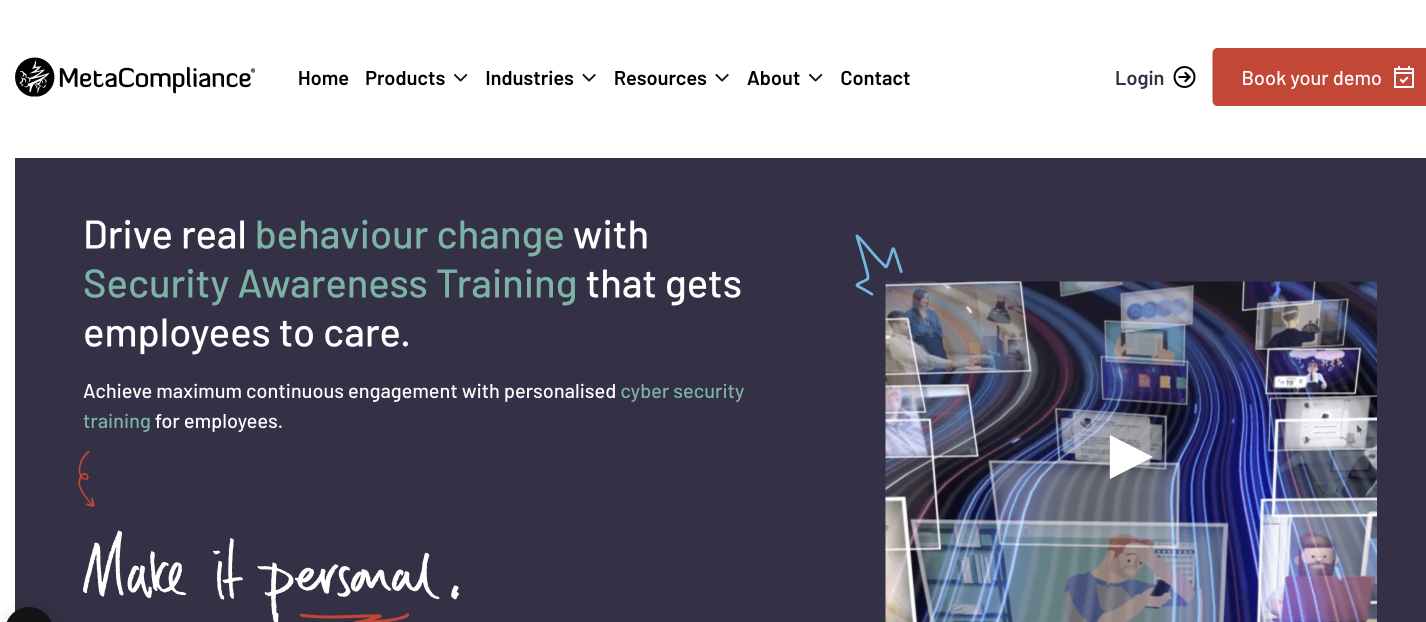
Metacompliance is focused on training for regulatory and procedural compliance. It’s a great choice for organizations where compliance with specific regulations is paramount. For example, if an organization or one of its departments handles medical information, Metacompliance can provide specific training to keep staff in compliance with HIPAA. At the time of writing, Metacompliance offers dedicated training programs for legal departments, sales, marketing, finance, procurement, and HR.
There are also specific training programs for users with high security privileges, such as executives and IT specialists. Metacompliance also boasts localization into over 40 different languages, making it attractive to international companies.
Pros:
- Role-specific training.
- Emphasis on regulatory compliance.
Cons:
- The platform is a large one and can be unwieldy.
6. KnowBe4
KnowBe4 Security Awareness Training is a good all-around provider for social engineering awareness training. It boasts all the expected features, including baselining, risk-scoring, ongoing training, gamification, and continuous assessment. KnowBe4 stands out thanks to its extensive content library, which includes interactive activities to keep learners engaged. KnowBe4’s reporting tools enable administrators to monitor learners’ progress and showcase the effectiveness of the training. It also includes phishing simulations and assessments to ensure users can spot malicious emails and deal with them appropriately. Reviews from trusted sources are generally very positive.
Admins like the platform’s automation, which tailors training to individual users and tracks their progress with minimal administrative intervention. The large content library is also a hit with many customers. It’s not all praise, however. Some users mentioned that parts of the content are out of date and should be rewritten to take new threats into consideration. A few reviewers say that they found the reporting tools lacking. Pricing for KnowBe4 isn’t transparent — you need to approach them for a quote to find out how much it costs — but buyers generally feel that it’s more expensive than comparable products.
Pros:
- Impressive content library.
- Effective automation.
Cons:
- Some content needs to be updated.
7. Usecure
Usecure is a widely used training product. It offers all the expected features, including baselining, ongoing training, etc. Usecure distinguishes itself from competitors in two main ways. One, it offers two different training styles. There’s a “fun” style, which is designed to engage through entertainment. There’s also a “corporate” style, which is more appropriate for higher-level learners and those who might be put off by apparent frivolity. Usecure evaluates users at the beginning of the program to assess their current knowledge level and identify specific areas of vulnerability.
It then attempts to address weak areas through regular training, quizzes and simulated phishing attacks. Unfortunately, it isn’t always successful in tailoring trainings to users’ needs: some reviewers have noted that their learners see the same material multiple times, which is discouraging and frustrating. That caveat aside, Usecure is popular and scores well on reliable review platforms.
Pros:
- Two learning styles.
- Large content library.
- Personalized training.
Cons:
- Some users see the same training content multiple times.
8. Curricula
Rather than being specifically a security training product, Curricula is a general training platform. It can be used to deliver instruction on a variety of different topics. That said, security awareness training is where Curricula really shines. Some users report that modules on other subjects are less than impressive but their cybersecurity training is noted for its effectiveness.
Curricula is especially notable for its training on compliance requirements, eg. NERC CIP. Curricula is a reliable cybersecurity and social engineering awareness training solution, especially in contexts where regulatory compliance is a concern. Another plus point for Curricula is its user-friendliness. The company’s website claims that it has an average setup time of 15 minutes, something that’s borne out by reviews.
Pros:
- Versatile and effective.
- Offers role-specific and regulation-specific training.
Cons:
- Not a dedicated social engineering awareness training platform.
9. Webroot
Webroot is a cybersecurity software provider, offering a range of different products. One of these is Webroot Security Awareness Training, a training program that’s broadly similar to competitors like Ninjio and KnowBe4. It’s less of a big name than its rivals but has attracted positive reviews from a few customers, who were impressed with its range of features and ease of use. In particular, reviewers were very happy with its training library. This library is comprehensive and is kept right up to date with information on all the latest threats. Because it’s a cybersecurity-centric company, Webroot is especially well-placed to keep track of the evolving security landscape and draws upon that expertise to create relevant and meaningful content.
One point to note is that Webroot Security Awareness Training wasn’t developed as a standalone solution; rather, it’s meant to be used in conjunction with Webroot’s other security products. It’s not entirely clear from either the company’s own information or from reviews how well Webroot Security Awareness Training might perform on its own. That said, it’s worth considering if an organization is planning to invest in security solutions as well as training.
Pros:
- An excellent training library.
- Created by cybersecurity experts.
Cons:
- Not designed as a standalone training solution.
10. Breach Secure Now
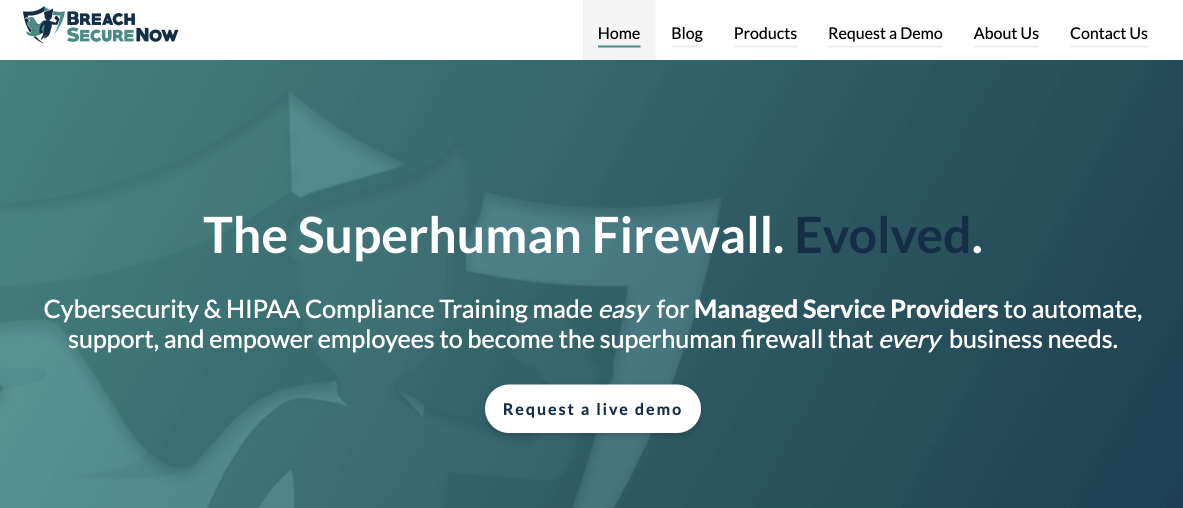
Unlike the other solutions on this list, Breach Secure Now isn’t a general social engineering awareness provider. Rather, it’s a platform designed specifically to address the training needs of managed service providers (MSPs). MSPs face unique challenges when it comes to cybersecurity and social engineering attacks, and Breach Secure Now was developed to address these needs.
That makes it an ideal choice for MSPs but perhaps less relevant for organizations in other fields. In terms of quality, Breach Secure Now is well-reviewed, scoring highly on reliable review platforms and attracting a lot of praise. Breach Secure Now is generally regarded as effective and well-designed. Reviewers particularly noted its approach to gamification, which is a little different to the standard leaderboard model. Instead of competing for high scores, users are motivated by badges and certificates that they can receive when they complete a part of the training successfully.
Pros:
- Well-designed, full-featured and effective.
- Tailored specifically for MSPs.
Cons:
- Less useful for organizations that aren’t MSPs.
Conclusion
Social engineering is one of the biggest threats to any organization. Guardey offers a gamified social engineering awareness training solution that keeps your users engaged for long periods of time. You can try it out for free during a 14-day trial or talk to one of our security awareness experts for more information.
Which provider fits your team? Decide after a demo
We'll walk you through how Guardey trains teams to recognize manipulation, from phishing to pretexting, and answer every question you have.
Request a demo