
15 July 2025 • Cyber security

Student data is sensitive and needs to be handled with care. If misused or exposed, it can lead to anything from privacy violations to identity theft.
That’s why many K-12 schools train their employees in security awareness.
The goal of this training is to make sure employees are:
- Aware of the importance of student data security
- How to protect that data
- How to report a possible threat when they encounter one
But with so many training platforms out there, finding the right solution for your school can be difficult.
In this article, we’ll share how to select a platform that best fits your wishes. We’ll also share a list of the best tools that are currently available.
What is K-12 security awareness training?
The purpose of K-12 training is to ensure that school employees understand the importance of security, recognizes security threats, and knows how to report them.
So what makes K-12 security awareness training different from regular training?
Both are similar, but the most important distinction is in the content. School employees simply face different security and privacy threats than the average person. From cyberbullying to data requests from parents — there are many topics with important nuances that aren’t taught in the average awareness program.
What to look for when a selecting a K-12 security awareness training platform
1. Content
Not every security awareness platform offers specialized training programs for the education sector. So this is what you should focus on first.
What does the content program look like? What topics are discussed that are specifically relevant for teachers and other school employees?
Examples of topics that should be included:
- The importance of student data
- How to recognize and prevent cyberbullying
- Phishing and social engineering tactics targeting school staff
- Safe use of classroom technology and remote learning tools
In addition, the program should cover the foundational topics that are essential for any organization.
2. Learning experience
Teachers are busy. From preparing classes to teaching and grading — their calendars are always full. And even if they weren’t you want them to spend as much time on their students, and as little as possible on security awareness.
That’s why day-long courses are simply not the way to go.
Instead, look for training programs that offer short, gamified training. Some platforms offer micro learnings that take about 5 minutes per week from teachers every week, which should be able to fit in any schedule.
Also, pay attention to the rest of the training experience. Some programs have a corporate ‘vibe’ that doesn’t match with what most school employees are accustomed to.
It also helps if the training is intuitive to use, even for staff who may not be very tech-savvy. No one wants to dig through complex dashboards or struggle with logins just to complete a five-minute training. Look for platforms that are mobile-friendly, easy to navigate, and require minimal setup from the school’s IT team.
3. Admin experience
Now that we’ve covered the learning experience for users, it’s also important to look at how a platform works for admin.
Most IT managers or CISOs at K-12 schools have little to no time to spend on security awareness. However, maintaining a platform can quickly turn into a full-time job based on the level customization that is necessary.
There are platforms such as KnowBe4 and Hoxhunt that require you to put together a training program yourself by picking from a content library. These content libraries are vast, which can be a pro for a CISO with enough time on their hands. But if you’re short on time, running an awareness program on these platforms can become a time-consuming endeavour.
Plug-and-play platforms like Guardey take away all of this effort. The training sessions are automatically scheduled. After a year, the platform has learned about your user and will offer training based on their previous performances.
Aside from just time management, look for the following from an admin perspective:
- How is user management organized?
- Are there native integrations with Azure AD, Microsoft Teams, etc?
- How are the reporting and analytics features to track participation and performance?
We’ve compared the 4 best training platforms for K-12 schools
Now that you know what to look out for in an awareness platform for your K-12 school, let’s get into the best picks.
1. Guardey
Guardey stands out because it has a specialized program for the education sector. It discusses important security risks in a context that education professionals recognize and understand.
Guardey is the only security awareness platform that’s fully gamified. Each week, users spend just five minutes completing challenges — competing with colleagues for the top spot on the leaderboard. Through storytelling and game mechanics, training feels like play, sparking friendly competition and driving real engagement.
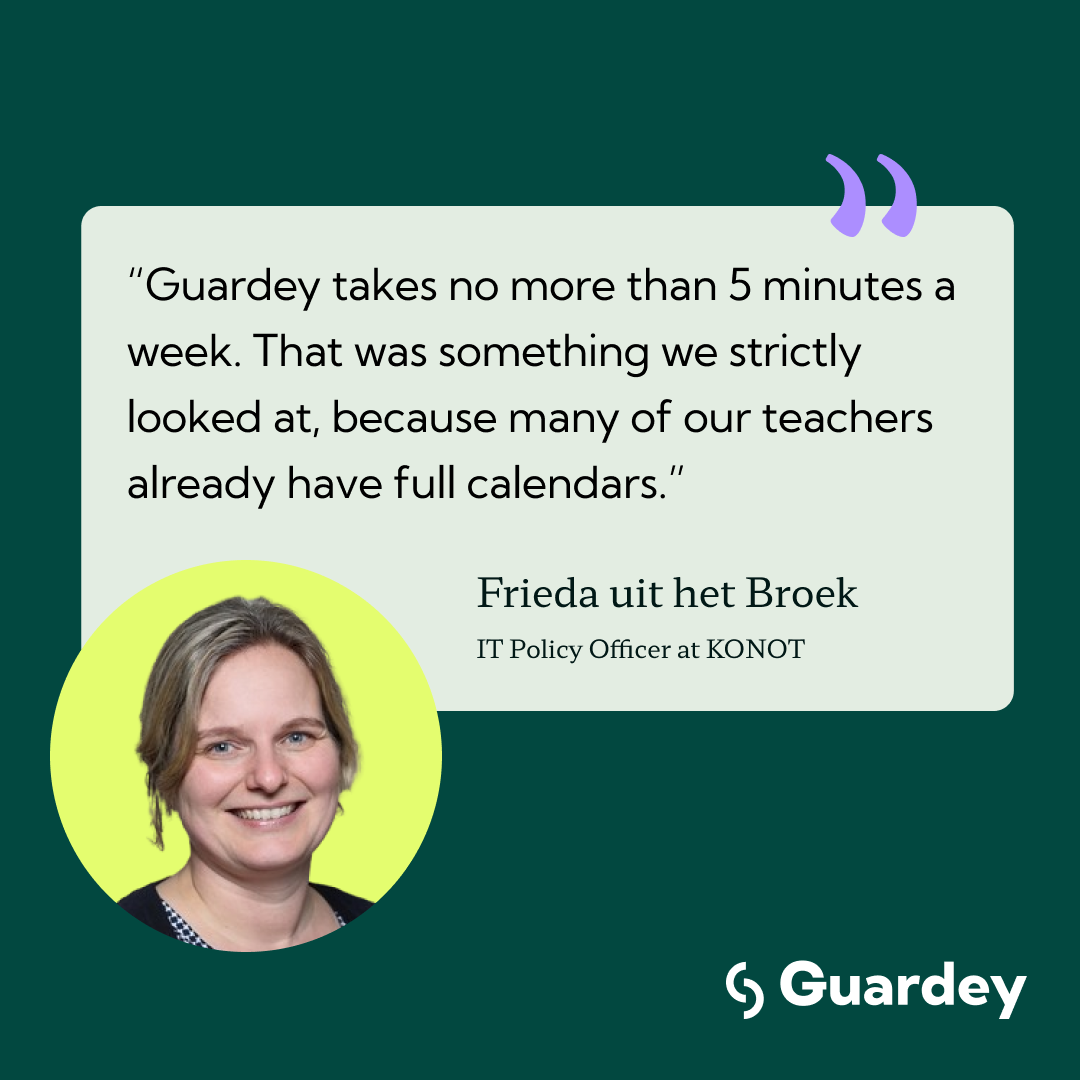
Since Guardey only requires 5 minutes of your users’ time per week, it’s the perfect fit for the average school teachers. Teachers have very busy schedules and don’t need too much more on their plate. However, 5 minutes a week or doable for anybody. Guardey comes with a handy mobile app, which makes it easy to take on a challenge anywhere at any time.
Customer review
“Many of our employees like the fact that they are competing with other departments. They really enjoy the friendly competition. This is helpful because they motivate each other to do the training so that they can stay ahead of other departments on the leaderboard. I can see exactly which departments are doing well. I was surprised to see that the department that performs best, used to have the most trouble with the KnowBe4 content. The teachers that used to be against security awareness training the most, are now the most active.” – Source
Security awareness your staff will actually finish
Schools handle sensitive pupil data on tight budgets and tighter time. Guardey trains staff to recognise phishing and social engineering in weekly three-minute challenges.
Start your free 14-day trial2. Fortinet
Fortinet offers a dedicated version of their Security Awareness & Training service specifically for K-12 schools. The curriculum includes over 23 modules, with at least 10 tailored specifically to the challenges that school staff face. These modules cover topics like protecting student data, safe remote learning, and handling sensitive information in an educational environment.
But Fortinet doesn’t stop at faculty and staff. Starting in 2023, they’ve also introduced cybersecurity curriculum for students — helping to create a school-wide culture of security awareness that spans both educators and learners.
For school administrators, Fortinet is easy to roll out. It’s a SaaS platform that updates automatically and includes reporting features to track compliance. It also integrates with Fortinet’s broader security tools if your school is already part of their ecosystem.
Fortinet has a lot of different cyber security products, which means awareness training isn’t their sole focus.
Customer review
Fortinet has a lot of different producers, with a lot of reviews. However, we were unable to find a review about Fortinet’s awareness program.
3. Hoxhunt
Hoxhunt is a platform known for its adaptive phishing simulations and personalized micro-learnings. It doesn’t offer a K-12-specific version, but its approach to awareness training can still be a good fit for schools that want a highly personalized experience.
Each employee receives simulated phishing emails and brief training lessons that are tailored to their behavior, role, and past performance. If someone struggles with a particular kind of threat, Hoxhunt will automatically adjust their future training to help them improve. This means that every staff member follows their own unique learning path.
Training is designed to be quick and engaging. Simulations typically land in a user’s inbox every 10 days, and successful completion earns them stars, badges, and leaderboard placements. It’s an effective way to encourage participation and turn learning into a friendly competition — even among non-technical staff.
Customer review
“Hoxhunt makes learning to spot phishing mails practical fun and also competitive. I enjoyed the gamified approach, each drill fell like small task, and leaderboard add a fun. It makes whole thing exciting. I love to answer the the mcq we got after reporting phising mail. The simulated phishing email can feel a bit easy or kind of repetitive. It would be nice to see more variety and increasing diffcutly level, to keep the challenge.” – G2
4. NINJIO
NINJIO takes a unique approach to security awareness by using short, Hollywood-style videos to tell real-world breach stories. Each episode is 3–4 minutes long and is designed to keep viewers engaged from beginning to end — almost like watching a mini thriller instead of sitting through a training module.
These animated stories are based on actual cyberattacks, and each one teaches a single, clear lesson. This approach helps users understand not just what to do, but why it matters. It’s particularly effective for users who tune out during traditional training.
The company also offers an education program. While the admin setup may require a bit more initial effort than some other platforms, NINJIO’s cinematic storytelling and student inclusion make it a compelling choice for schools that want to build engagement and deepen awareness across all levels.
Videos can make for a bit of a time-consuming learning experience, especially for teachers who already have full schedules. So this is something you should keep in mind while considering NINJIO.
Customer review
“The content is fun and the users look forward to getting the videos (me included). We are able to hand-pick the content we want them to focus on. We were asked a year or two ago to move from our IDP, Otka, to Azure. Recently on a help ticket I inquired on this and they said we could move back to Okta, but we were never informed by our account manager. Additionally, some behind the scenes stuff keeps giving us glitches in delivery or access. More so than previous years. The last one was when only 10% of our users received their monthly video due to an email glitch.” – G2
Conclusion
Each of the platforms we covered has its own strengths. But if you’re looking for a fully gamified solution that keeps employees engaged while taking the hassle out of compliance, Guardey is a great place to start. You can try it with your team for free for 14 days and see the difference it makes.
See how K-12 schools roll out Guardey
Book a personal demo and discover how schools train every staff member with 3-minute weekly challenges, without adding to anyone's workload.
Request a demo